
Introduction
Ray tracing has evolved from a feature in niche graphics feature into a headline promise plastered across GPU boxes, game trailers, and console marketing. Yet for many gamers, it still comes with a very common dilemma: should we go for stunning visuals versus an FPS performance drop.
In modern gaming, ray tracing often looks spectacular in screenshots but still may feel less convincing when frame rates dip below comfortable levels. Understanding how it works, where it shines, and when it makes sense to buy will allow gamers to make smarter decisions instead of blindly flipping the “RTX On” switch.
Ray Tracing in Modern Gaming
Ray tracing gaming has become a major selling point for both PC GPUs and current-generation gaming consoles. This is because of the promise of realism, lighting, reflections, and shadows that behave more like a figment of virtual reality. Compared to traditional techniques, ray tracing can make scenes feel more grounded and cohesive.
However, this level of realism isn’t free. Enabling ray tracing-based performance features often results in double-digit losses in FPS, especially when running at higher resolutions. In 2026, ray tracing is less of a novelty even though it is not a default “always-on” feature for most systems. The real value lies in knowing which and when ray-traced effects matter.
Ray Tracing Explained: How Does It Actually Work?
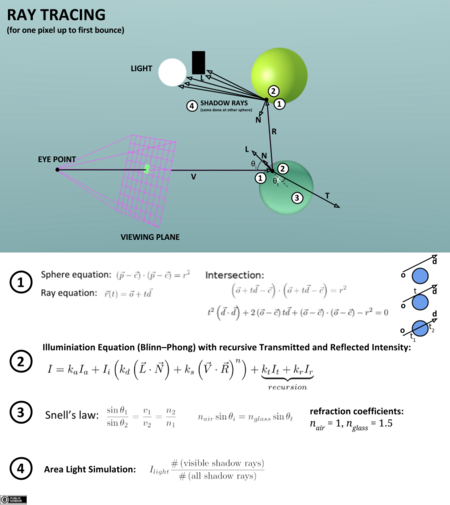
Basically, what ray tracing does is that it simulates how light would behave in a given scene. In this technology, rays are cast from the camera through each pixel. Then they get reflected from surfaces and then interact with materials before reaching the view of the user. This produces a lighting effect that is physically very accurate and comparable to lighting in real-life.
Traditional rasterization took a different approach. It would project 3D geometry onto a 2D screen and then apply lighting using shortcuts such as screen-space reflections. Rasterization is extremely fast and well-optimized when it comes to computation, but it relies heavily on visual tricks rather than accuracy.
Because ray tracing directly calculates light interactions, it delivers superior realism which comes at a far higher computational cost. That’s why most games in 2026 still use hybrid rendering by combining rasterization for general rendering with ray tracing for select effects.
The Real Benefits of Ray Tracing in Games
Ray tracing gaming delivers its biggest gains in mainly three ways:
- Reflections: Ray-traced reflections can accurately simulate the environment which also includes off-screen objects.
- Shadows: Shadows become more realistic by avoiding the harsh edges which are common in rasterized lighting.
- Global Illumination: Light bounce comes off more naturally.
These benefits are most noticeable in story-driven and cinematic games where atmosphere and lighting play a major role in gameplay experience. These are not so effective in competitive gaming as the reduced FPS makes it not so worth the computation.
Why Ray Tracing Performance Is So Demanding
Ray tracing is computationally very expensive because to simulate lightning, every ray must be tested with complex geometry before being ready to view. When multiple rays and their bounces are involved, the computational workload increases exponentially.
Modern GPUs include dedicated ray-acceleration hardware to speed up these calculations needed for ray-tracing, but even in 2026, ray tracing performance remains heavily GPU-bound. So, you do experience considerable FPS drop.
Is Ray Tracing Worth It for Gaming in 2026?
For most players, ray tracing is best approached as a selective enhancement and not a mandatory setting. A practical way to handle this dilemma is to establish a comfortable baseline of frame rate and then enable ray-traced features one at a time.
If performance dips too far, then reduce ray tracing quality which can then restore the necessary balance. This incremental approach will allow players to enjoy the best aspects of ray tracing without having to sacrificing their competitive gameplay
Frequently Asked Questions
1. Does ray tracing help competitive gaming?
Ray tracing mainly enhances the visuals and not competitive performance. But if you are a competitive gamer, then the FPS loss due to ray tracing is generally not worth the benefits ray tracing offers.
2. Should I upgrade my GPU or CPU to feel the effect of ray tracing?
Ray tracing performance heavily depends on the GPU. While a strong CPU does help in the overall gameplay aspect, but upgrading the graphics card has the biggest impact for ray tracing.
3. Can gaming laptops handle ray tracing well?
Entry level gaming laptops can run these features, but lower power limits mean more reliance on upscaling and reduced settings for handling it. This is not the case when it comes to desktops.
4. Which type of games benefit the most from ray tracing?
Ray tracing is most noticeable when it is dealing with visually rich and narrative-driven games along with dramatic lighting. In competitive shooters, its impact is far less significant.