
Active Noise Cancellation (ANC) in Audio devices
In a world which filled with traffic noise, office chatter, airplane engines, and constant digital commotion, getting to enjoy silence is rare. This is exactly where Active Noise Cancellation (ANC) steps in. It is found in mid-range to premium headphones and earbuds. ANC is one of the most transformative audio technologies of the last decade.
But what is active noise cancellation really doing inside your headphones? Why do some people feel pressure when ANC is turned on? And how is it different from simple noise isolation?
Let’s break it all down from the science of sound waves to real-world scenarios and use cases to simplify it for you and help you decide if you need it.
What Is Active Noise Cancellation (ANC)?
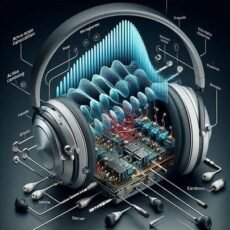
Active Noise Cancellation is a technology that actively reduces the unwanted background sounds using the microphones and speakers by digital signaling processing. Unlike earplugs or thick headphone padding that merely block sound, ANC can counter noise with sound.
In simple terms, ANC headphones listen to the noise around you and generate an opposing sound wave that neutralizes it. Because of this, background noises are diluted or eliminated, and your music or podcast comes through with far more clarity.
This is why ANC feels like a step beyond traditional noise blocking. It doesn’t just muffle noise it removes it before it reaches your ears.
How Does Active Noise Cancellation Work?
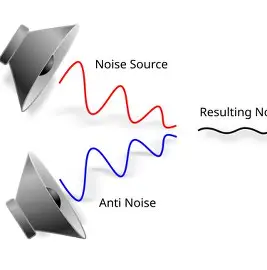
At the heart of ANC lies a physics concept called phase cancellation.
Sound travels in waves. Every wave has both peaks and troughs. If you take a sound wave and then play an identical wave an opposite phase, then the peaks will align with the troughs so the two cancel each other out.
ANC headphones does this in real time through a multi-step process:
- Small microphones placed inside or outside detect environmental sound
- The onboard processor then calculates the exact opposite waveform that is needed to counter that noise.
- This inverted sound wave will meet the incoming noise and will neutralize it before it reaches your eardrum.
What Is Transparency Mode and Why Does It Matter?
Blocking out the world entirely isn’t always safe. SO, here comes the Transparency Mode.
Transparency mode uses the same microphones as ANC but it plays environmental sound into your ears instead of canceling it. This allows you to hear traffic, conversations, or announcements while also listening to music. I really like using this mode, as it gives a very different experience.
It’s especially useful for:
- Runners and cyclists
- Office use
- Commuting
- Situational awareness
Types of Active Noise Cancellation Systems
Not all ANC implementations are of the same type. There are three primary approaches which are used in consumer headphones today. They are:
1. Feedforward ANC
- Microphones are placed outside the ear cup or earbud
- It captures noise before it enters your ear
- It is very power-efficient
- Less accurate when there is sudden change noises
2. Feedback ANC
- Here, microphones are placed inside the ear cup
- It cancels the noises based on what actually reaches your ear
- It is far more precise
3. Hybrid ANC
- It combines both internal and external microphones
- Most effective and adaptive approach
- It is found only in flagship headphones and earbuds
Hybrid ANC is widely considered the gold standard for most advanced modern noise-canceling headphones.
Passive Noise Cancellation vs Active Noise Cancellation
These two terms are often confused, but they work very differently. The different Noise eliminations are:
Passive Noise Isolation
- It relies on using physical barriers (ear pads, ear tips) to reduce noise
- It works best for mid- and high-frequency noise
Active Noise Cancellation
- It uses microphones and sound waves
- This is the best system for low-frequency, constant sounds
- Much more effective for travel and work environments
The Downsides of Active Noise Cancellation
As impressive as ANC sounds, it still has a few drawbacks like:
Battery Consumption: ANC requires using microphones, processors, and speakers and that too continuously, which will use up more battery life then otherwise.
Sound Signature Changes: Some ANC systems may slightly alter the sound profile. Audiophiles may notice these subtle differences when ANC is enabled.
Wind Noise: Strong wind interacting with external microphones can also confuse the ANC system and create whooshing or popping sounds. Hence, many headphones now include wind-reduction modes to address this.
Safety Concerns: In public spaces, blocking out sound entirely can be very dangerous. Here, transparency modes can help.
Final Thoughts: The Science of Silence
Active noise cancellation is one of those rare technologies that may feel almost magical once you get experience it. By leveraging real-time processing, and smart microphone placement, ANC headphones can not only block the world, but they can literally reshape how you interact with sound.
Is Active Noise Cancellation Worth It?
If you:
- Travel frequently
- Work in noisy environments
- Need deep focus
- Value clarity over raw loudness
Then ANC is absolutely worth it.